Hi, I’m Hunter.
Former scuba instructor, ski guide, and conservation lead. Current creative strategist, dabbling dungeon synth artist, and dad. I use strategy, storytelling, and design to connect communities, build better brands, and try to do good for my planet and other people whenever I get the chance.Most of my work involves translating complex ideas into stories people can understand, support, or buy into.
I firmly believe the best place to make a difference is your immediate community. As a recent London transplant (with full rights to work in the UK), I'm excited to put down roots, collaborate with talented people, and tackle meaningful challenges together.
Brand Strategy • Customer Insight • Campaign Development
Google Fiber faced a quickly approaching deadline to develop a compelling, independent brand identity before stepping out from under the Alphabet umbrella.
I was brought on to pitch consumer-facing creative strategy, with the caveat that print deadlines loomed and brand guidelines were still in their infancy. I also had to balance competing priorities from client leadership:
We needed a strategy that could do both, across web and print, without the instant recognition and trust of the Google name.
Establishing Differentiation: Testing a more human, lifestyle-focused voice as GFiber moved beyond the Google identity.
I pitched an approach that could satisfy both sides: build a distinctive new brand without sacrificing the direct-response fundamentals that captured interest and converted.
We couldn’t wait for finalised brand guidelines without missing crucial launch dates, so I used the first piece in GFiber’s “Welcome” acquisition series as an iterative testing ground.
Instead of presenting GFiber as another cold utility, we focused on what better internet actually meant for the people using it. Technical fiber specs became stories about everyday connection, backed by clear hierarchy, strong calls to action, and the direct-response mechanics needed to drive acquisition.
Our first testing ground for pairing the emerging GFiber brand with direct-response fundamentals.
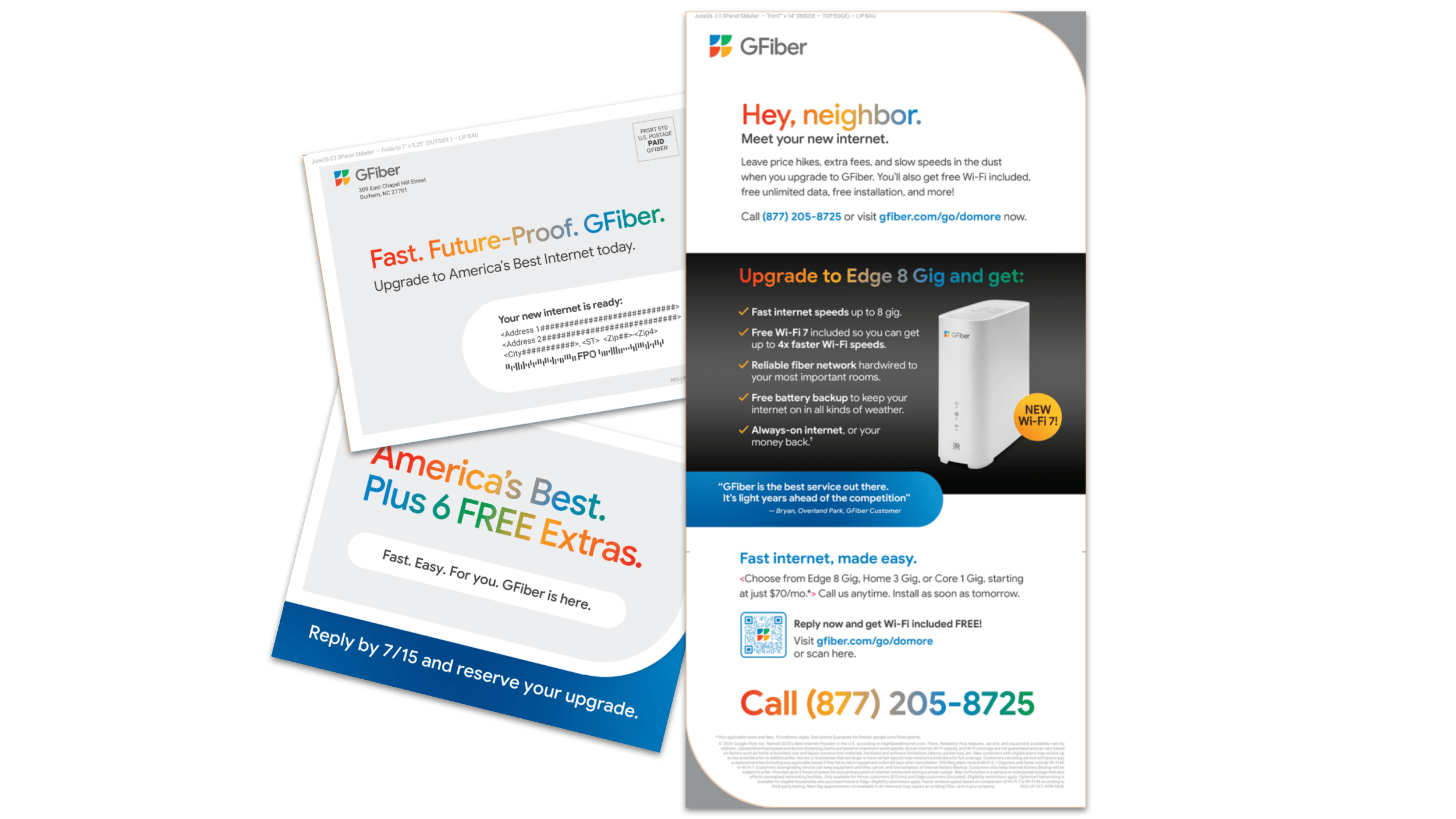
Pairing aggressive promotional offers with a warmer, more approachable GFiber voice.
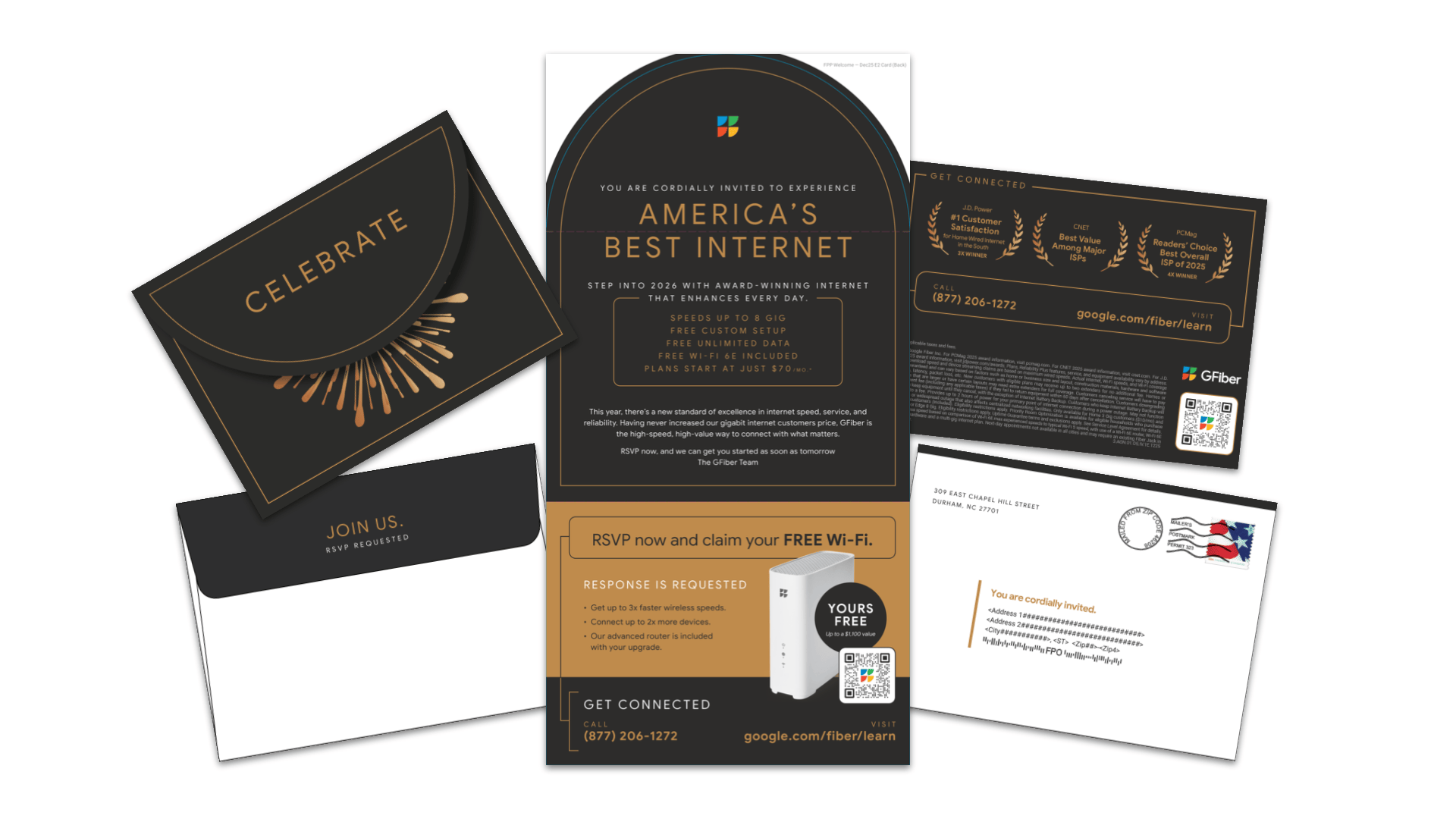
Using exclusivity, occasion, and seasonal timing to make an internet offer feel like an invitation.
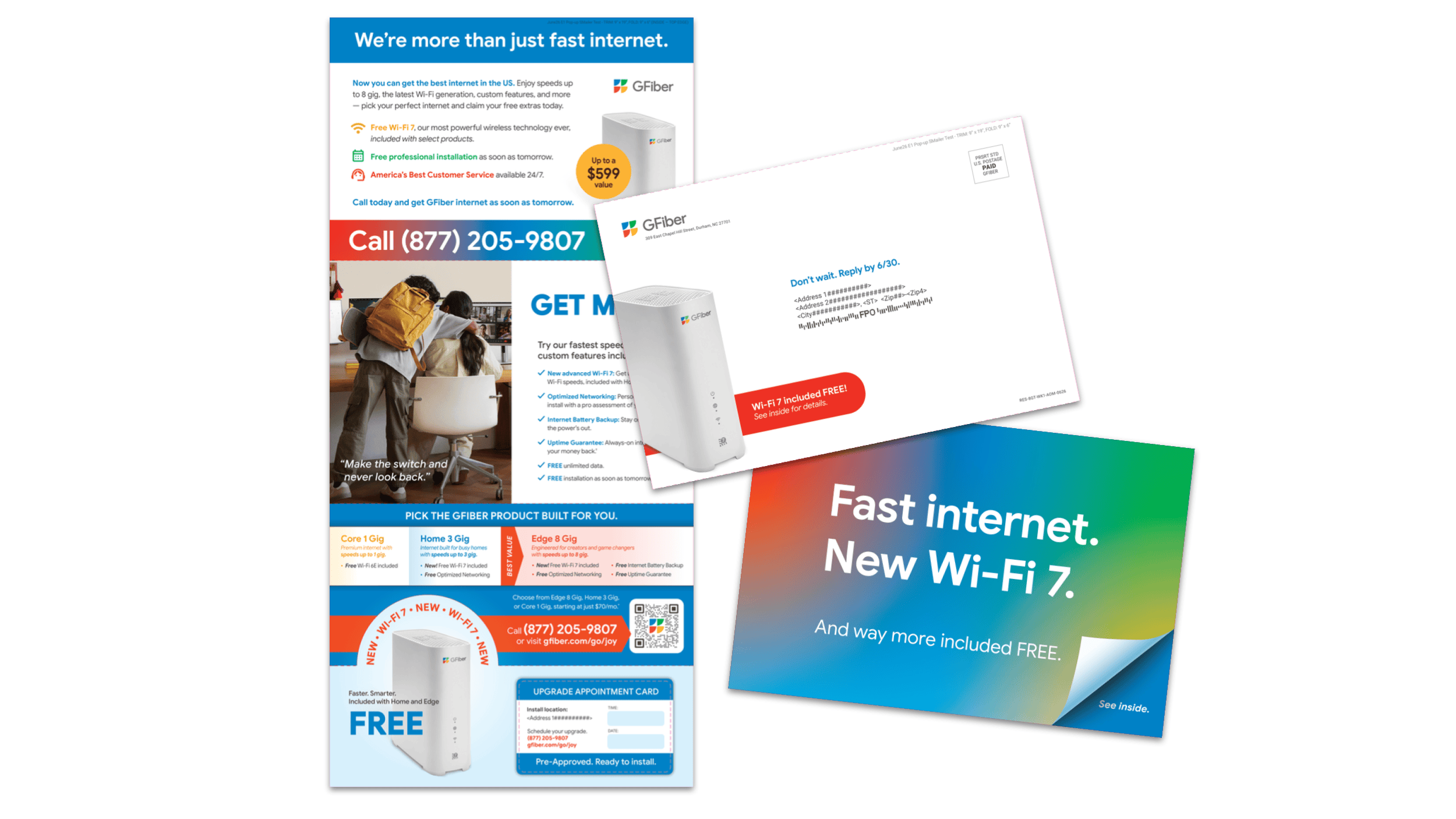
Turning a Wi-Fi 7 product launch into something tactile, playful, and worth opening.
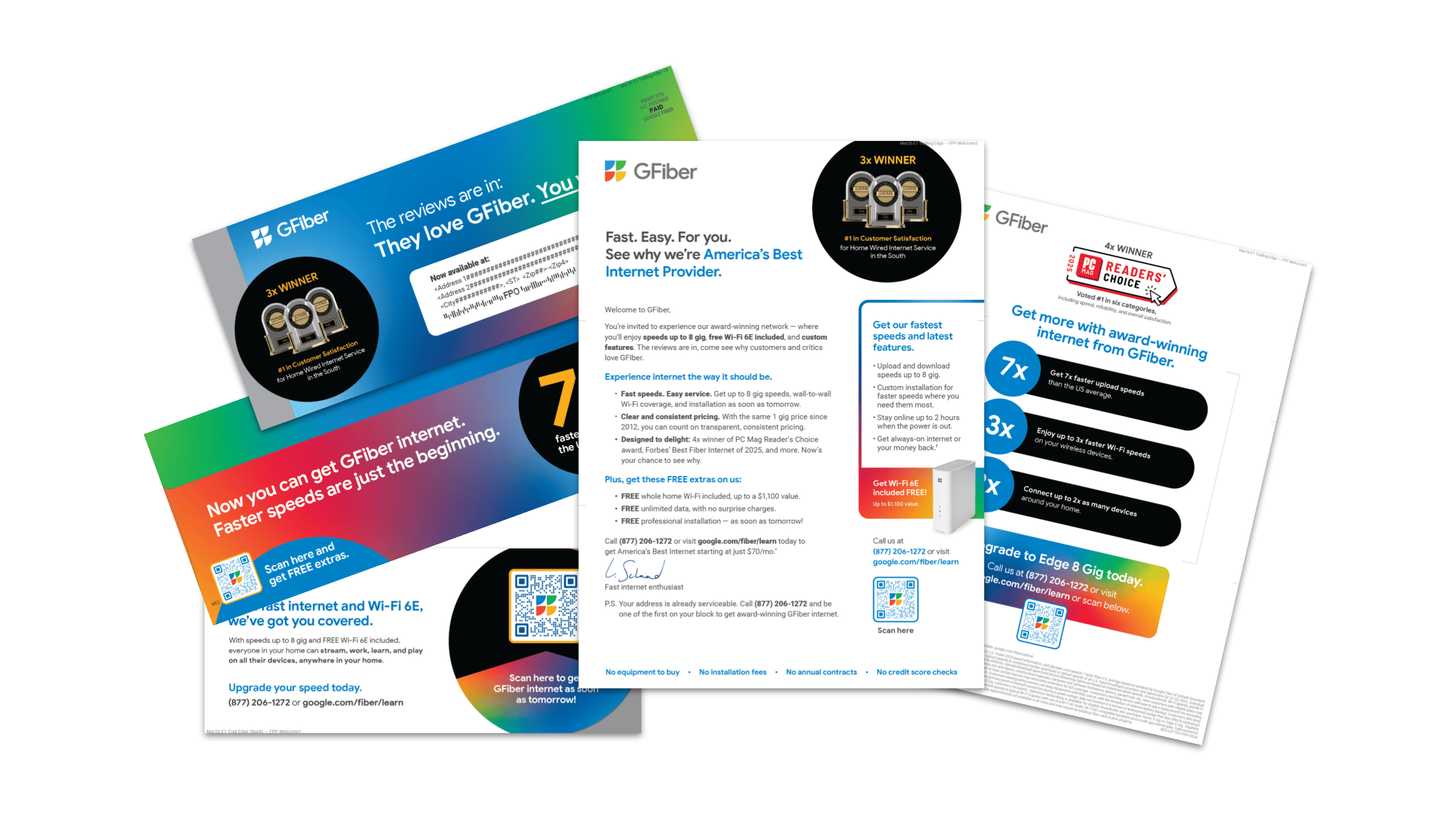
Using customer reviews and third-party recognition to let someone else make the case for GFiber.
The campaign gave GFiber a messaging model it could carry forward while setting a new benchmark for acquisition performance:
The launch piece converted 4.67% of a cold acquisition list, well above the typical 1–2% benchmark for prospect direct mail.
Senior leadership expanded our concepts into billboards and digital out-of-home for GFiber’s national market launches.
Fundraising Strategy • Campaign Development • Donor Engagement
“Glacier National Park needs your help…”
Glacier National Park Conservancy was seeing declining response from some of its most reliable donor lists. Federal funding cuts, record visitation, and visible climate impacts had led to years of increasingly frequent and urgent appeals. Donors were fatigued, income was falling, and critical research and maintenance projects were piling up.
We needed to give longtime supporters a reason to engage again—and create a more reliable source of funding for the park.
Five years of donor messaging revealed the same pattern across conservation organisations: a persistent panic alarm that had been ringing non-stop for half a decade.
The problem wasn't indifference. It was desensitisation. Repeated crisis appeals had distanced supporters from the awe and wonder that inspired them to give in the first place.
We shifted the narrative from urgency to ownership, anchoring the campaign in evocative, location-focused storytelling:
“Walk with me beneath pine boughs dripping pearls of resin,
feel the frigid pull of rivers swollen with glacial runoff...”
Rather than asking donors to rescue a park in peril, we invited them to take part in its progress—replacing alarmist calls to action with messages centred on hope, tangible results, and personal stewardship.
01 • SENSORY COVER HOOK
“If you have ever hiked the Highline Trail, you know the feeling. Stepping out along the Garden Wall, the sweeping valleys unfolding below you, the crisp alpine air... it is a uniquely Glacier experience.”
“Glacier hosted initial trials for the world's first vaccine for White-nose Syndrome in summer 2024. Your donation directly supports more than a decade of research protecting 3,000+ resident little brown bats.”
Replacing mass appeals with personalised variable data inserts that connected individual donor giving histories directly to active park stewardship initiatives across Glacier.
We tested the new progress-led messaging against Glacier's legacy crisis appeals. The new approach outperformed the controls and helped reverse declining donor response.
Funded a pioneering wildlife immunisation study protecting local little brown bats against White-Nose Syndrome.
Established a progress-led messaging framework designed to strengthen donor retention beyond the initial campaign.
Editorial Strategy • Policy Communications • Long-form Writing
Bellingham, WA was under growing pressure to address housing availability, affordability, and long-term planning as the city prepared its 20-year growth plan. While debates over zoning reform and growth planning played out at the city level, public understanding lagged behind the complexity of the decisions being made.
A proposed sustainable residential village was entering this environment. Rather than market the development directly, we needed to influence the conversation surrounding it: helping residents understand the policies and trade-offs behind local growth while making a broader case for thoughtful, sustainable development.
Urban growth policy is shaped by a complicated tangle of technical planning documents, competing political interests, and emotionally charged public debate. Our job was to make those decisions understandable—and give residents the context they needed to participate when Bellingham asked for public input.
I positioned development as a question of long-term community stewardship, using long-form editorial to explore the choices Bellingham faced as it grew. Rather than argue directly for the project, we made the case issue by issue: housing density alongside urban forests, infill alongside sprawl, and new development alongside the infrastructure needed to support it.
Each piece connected policy to its local consequences, giving readers both the context and opportunity to weigh in on the decisions shaping Bellingham’s growth.
Reframes housing and tree canopy as complementary goals, making the case for a “braided” approach that protects urban forests while expanding middle housing.
Uses Washington's middle-housing reforms and local growth targets to make the case for concentrating new homes in Bellingham rather than pushing development into surrounding areas.
We turned a development pitch into a broader public conversation about how Bellingham should grow.
Turned planning documents, zoning changes and local data into editorial content residents could actually use.
Connected policy issues to opportunities for input, giving readers the context they needed to weigh in on Bellingham's growth.
Positioned sustainable development within the larger debate around housing, environmental protection and responsible urban growth.
EDITORIAL LEADERSHIP • INTERNATIONAL TEAM MANAGEMENT • SEO CONTENT STRATEGY
During a major restructuring at DIVEIN.com, then predominantly a scuba publication, I saw an opportunity to turn years of fragmented and overlooked content into a dedicated editorial department with an audience and identity of its own.
I built the new Ski and Outdoor verticals from the ground up: developing the editorial strategy, reworking legacy content, and assembling an international contributor team.
I needed a system that could produce consistently strong work across an international team and multiple time zones.
I created the editorial standards and production workflows from scratch, but I didn't want quality control to depend on prescriptive edits and rewrites after submission. Instead, I introduced weekly collaborative workshops where we could develop articles in progress, solve problems together, and give writers the context behind our editorial decisions.
That approach let me shift from correcting individual articles to building a team that could make stronger editorial decisions independently. At the same time, I aligned our publishing calendar with seasonal search demand, prioritising high-value reviews, buyer guides, and evergreen content ahead of peak traffic.
What began as a collection of overlooked content grew into two successful editorial verticals with audiences and identities of their own.
Scaled the new verticals to more than 200K additional monthly organic clicks in a single winter season.
Built enough audience and editorial identity for Ski and Outdoor to eventually spin out into dedicated publications.
Built and led an international contributor team producing consistent work for a North American audience.
Dedicated ski and snowboard publication that grew from DIVEIN’s ski vertical following rapid organic search growth.
Dedicated outdoor and boating publication that grew from DIVEIN’s outdoor vertical into a distinct title under DIVEIN Media Group.
I’m currently exploring long-term opportunities in strategy, brand, and communications. If you think we’d work well together, I’d love to hear from you. Based in London with full rights to work in the UK.